Why A Preschool Daily Routine Helps Children Thrive In The Early Years
May 14, 2026
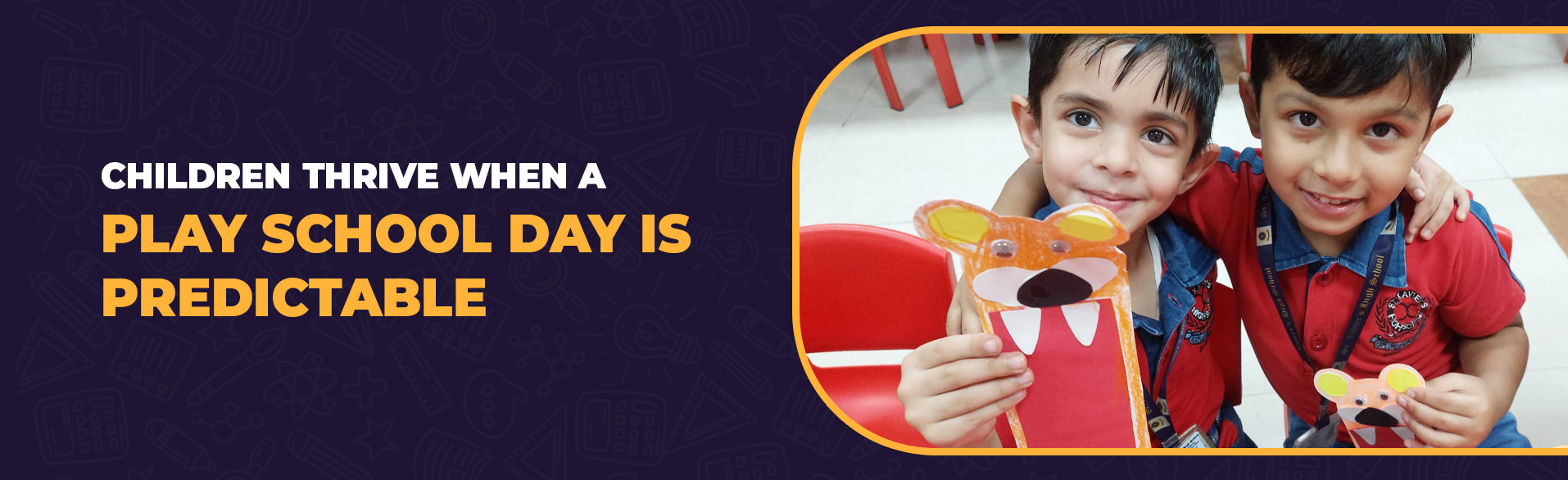
Children Thrive When a Play School Day is Predictable
Toddlers do not understand clocks. They measure their entire day through physical events. A solid preschool daily routine anchors them when they leave their parents for the very first time. Without it, a classroom just feels like a loud room full of unpredictable strangers.
You might think young children need total freedom to play all morning. But complete freedom usually creates massive anxiety. They need to know exactly when snack time happens. Understanding the daily flow gives them the exact mental safety required to actually focus on learning.
The Biological Need For A Predictable Schedule For Kids
Adults check their watches when they feel lost. A three-year-old cannot do that. A predictable schedule for kids replaces the mechanical clock entirely. It creates a highly visible sequence of events they can trust.
First comes the morning assembly. Then comes outdoor play. Then comes hand washing. This physical sequence acts as a biological anchor. When a child knows what happens next, their internal stress levels drop instantly. They stop worrying about when their mother is coming back.
The True Importance Of Routine In Preschool Classrooms
Drop-off time breaks the hearts of most parents. Tears flow freely at the front gate every single morning. The true importance of routine in preschool shows up right after the parents drive away. The familiar morning song tells the crying child they are actually safe.
The tears stop because the environment feels completely reliable. The teacher sings the exact same song. The wooden blocks sit on the exact same shelf. This aggressive consistency proves to the toddler that the classroom is not a chaotic, dangerous place.
How A Structured Preschool Daily Routine Builds Confidence
Confidence comes directly from daily mastery. A steady preschool daily routine allows young learners to master their physical environment fast. They learn exactly where to hang their small backpacks. They know to push their chairs under the table before leaving the snack area.
Nobody has to micromanage them after the first month. This independence makes them feel incredibly powerful. They stop waiting for adults to solve every minor physical problem. That small burst of daily independence builds the exact mental resilience they need for later years.
Balancing Free Exploration With Directed Activities
Routine does not mean running a rigid military boot camp. The day still leaves massive room for creative messes. The structure simply puts safe, predictable boundaries around the classroom chaos.
Teachers use the schedule to manage the room's physical energy safely. A loud outdoor running session naturally burns off heavy morning energy. A quiet reading circle follows immediately after. This deliberate biological pacing prevents the children from becoming physically exhausted and emotionally triggered by noon.
A Chaotic Monday Morning In Gurgaon
Rohan, a working father in Gurgaon, hated Monday mornings. His three-year-old son cried violently every time they pulled up to the school gate. The unstructured weekend completely disrupted the boy's internal clock.
Then the classroom teacher taught Rohan the morning greeting song. He started singing it in the car during the short drive. The son recognized the auditory trigger instantly. His tears stopped before they even parked the car. The routine bridged the scary gap between the house and the classroom perfectly.
Managing Hunger And Rest Through Predictability
A hungry toddler is an angry toddler. Low blood sugar destroys a young child's ability to share toys or listen to simple instructions. A structured day guarantees food arrives before the emotional meltdown actually begins.
The routine trains their young bodies to expect food at specific intervals. The same logic applies directly to quiet rest periods. Forcing a tired child to learn shapes never works. The daily schedule forces everyone to slow down and rest right when their biological batteries start flashing red.
- Mid-morning snacks stabilize moods before group activities.
- Set hydration breaks prevent sudden afternoon headaches.
- Quiet time allows their sensory systems to reset completely.
- Predictable packing-up routines signal the safe end of the day.
Easing The Heavy Transition Toward Grade I Expectations
Play schools exist to build the foundation for primary education. Moving from a completely unstructured living room into a formal Grade I classroom shocks the nervous system. The foundational years absorb that heavy shock very slowly over time.
Sitting in a circle for ten minutes trains their attention span gently. Standing in a short line to wash hands teaches basic social patience. By the time these learners face formal primary school teachers, they already understand exactly how a classroom physically operates.
Creating A Calm Foundation For Young Learners
A chaotic room full of expensive toys does not equal a good education. Young brains require absolute predictability to feel safe enough to take social risks. The schedule does the heavy lifting so the teachers can focus on actual emotional guidance.
If you want your child to experience a highly supportive early environment in Gurgaon, St. Xavier's High School in Sector 81 focuses entirely on this exact stability. Their experienced early years educators use a gentle, reliable daily flow to build quiet confidence. Their admissions desk can show you exactly how a calm morning schedule helps young learners settle in without the daily tears.